
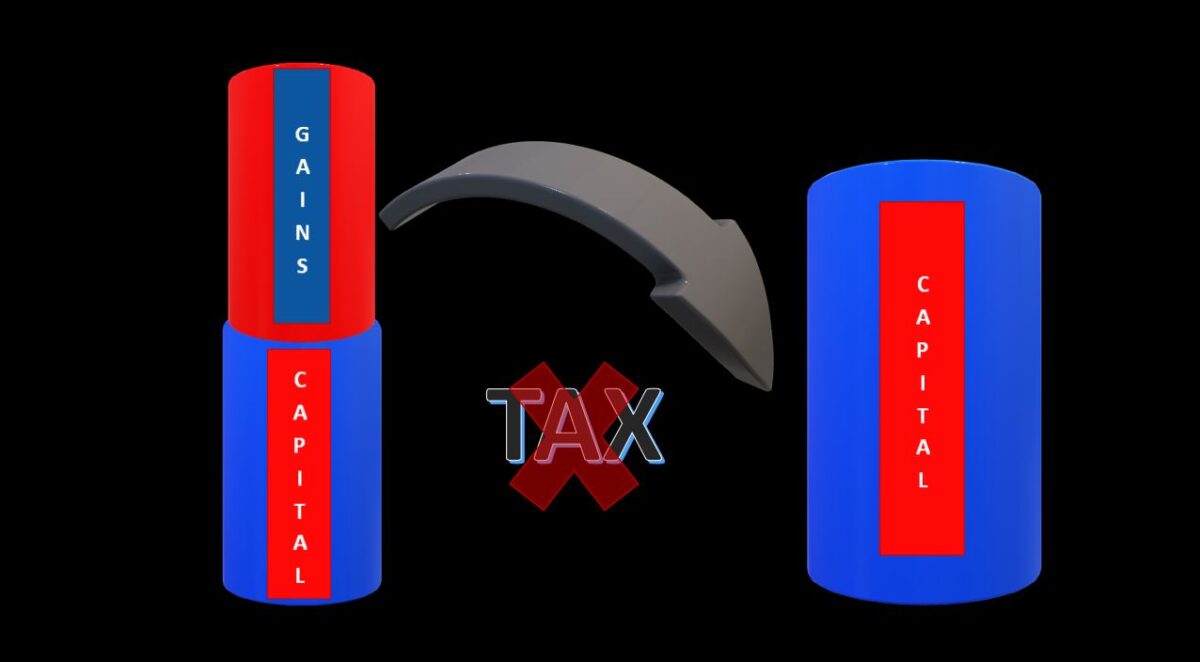
Markets have given a thumbs up to the Budget and the investors are again in some sort of dilemma. We have discussed this aspect earlier also in Greed/Fear and the Urge to Time the Market. Presently we are also closing towards end of the current Financial year. It therefore makes sense if we integrate our tax planning specific to capital gains to benefit from the available exemptions. It seems to be a good time to roll over capital gains to the extent that they are tax free.
Understand Your Capital Gains from Debt and Equity.
We have discussed Capital Gains earlier in Tax Planning and Tax Efficiency. Most of us have invested in either Mutual Funds, or directly in Shares. Mutual Funds are further classified as Debt and Equity, and both these categories have different tax provisions. Capital Gains are further divided as Long Term (LTCG) and Short term (STCG) based on duration of holding the asset/investment. There is further distinction between Debt and Equity while classifying the gain as LTCG or STCG. In case of Debt investments, the investment qualifies for LTCG only after three years. In case of Equity investment, it qualifies as LTCG after one year.
It is important for you to correctly classify your investment as Debt or Equity before assessing the tax liability on capital gains. There are also several types of Mutual Funds creating more confusion in the minds of the investor, esp the hybrid and balanced category. Some study of the scheme document will help you in correctly categorizing the investment as Debt or Equity.
Why to Roll Over Capital Gains ?
As per the current tax provisions, LTCG from Equity Investments up to ₹ 1 lakh is exempt from tax. The tax rate on LTCG from Equity Investments is 10%. This translates to tax saving of ₹ 10,000 in any year. However, if you do not realize the capital gains in any financial year, then you loose this saving. Every investor should therefore endeavor to redeem at least that much of investment in Listed Equity (direct or through Mutual Funds) every year, which results in Long Term Capital Gains up to ₹ 1 lakh.
Grandfathering of Capital Gains.
The provision of taxing the LTCG from Equity investments was introduced in the budget of 2018-19. Before this the LTCG was tax free. As the budget was presented on 01 Feb 2018, there was provision made to protect the interest of existing investors at that time. This was done by grandfathering the capital gains, meaning the value of the asset on the preceding day ie 31 Jan 2018 will be considered as the purchase price. The losses, if any, will however be calculated only based on actual purchase price.
We can understand this with a simple example. If you bought a share for ₹ 100 on 01 Jan 2017, and its price was ₹ 140 on 31 Jan 2018, then you had potentially tax-free LTCG of ₹ 40 on that day. Assuming that you are still holding that share and its price now is ₹ 180. The actual LTCG is ₹ 80, but for tax purposes, the purchase price will be ₹ 140, and only ₹ 40 will be the taxable LTCG. If you were holding a total of 2500 shares then the actual LTCG will be ₹ 2,00,000. But as discussed, the Taxable LTCG will be ₹ 1,00,000. This is equal to the tax-free ceiling and hence you will pay no tax. In case of investments bought after 31 Jan 2018, there is no provision of grandfathering.
This aspect becomes slightly confusing in the case of SIPs which someone started before 31 Jan 2018 and continued after that also. You will have to evaluate the LTCG on investments made before 31 Jan 2018 separately due to the grandfathering provisions.
What to Redeem- Debt or Equity Investments?
As the tax benefit is available only on Equity Investments, it makes no sense to redeem Debt Investments. I have interacted with some friends who got advice from their portfolio managers to redeem Debt Mutual Funds and re-invest. Debt Funds/instruments earn through interest. Their growth is generally linear and any break in investment pauses that growth. Further the time criteria for LTCG on Debt instruments is three years after which the tax rates reduce to 20% with indexation benefit. Any redemption before this period would be disadvantageous from tax point of view. Even after this period, it makes no sense to redeem if you don’t need the funds at that time. Only meaningful purpose can be if you want to switch funds to some other investment option as part of Asset Diversification. The redemption for tax benefit should therefore be of Equity Investments only.
Plan Your Re-investment Before Redemption of Capital Gains
After realizing the gains, you will face the problem of re-investment. It is therefore important to plan the re-investment before any redemption. The simplest method is to sell and buy at the same price on the same day. This way there will be no loss in the asset value and the realized capital gains will roll over as principal investment. In case of Mutual Funds there is also a provision to switch from one scheme to another of the same Fund House. You can use this provision to simultaneously execute an Asset Diversification Plan with the plan to roll over Capital Gains.
Recommendations
- Redeem Long Term Capital Gains equal to ₹ 1 lakh from Equity Investments before 31 Mar.
- Factor the provision of Grandfathering of Capital gains before calculating the taxable capital gains on investments purchased before 31 Jan 2018.
- Plan the reinvestment of redeemed funds before realising capital gains.
- Do not redeem Debt investments until and unless you need the funds for some planned expenditure. It can also be done as part of your plan to re-balance the Asset Mix.
4 replies on “Time to Roll Over Capital Gains”
Very informative and well explained. Simple and correct logic. Thank you
A very valuable article! Great learning for the investors! Thank you!
Great article, very informative. Keep it up with your illuminating ones.
Thanks for simple to understand,actionable, clear cut advice.
The best.